







Quiet Gaming Keyboards: Are Magnetic Switches Quieter Than Mechanical Switches?
Gaming keyboard marketing tends to focus on polling rate, actuation distance, Rapid Trigger sensitivity, and scan rate. Sound is harder to capture in one number. A fast keyboard can still be distracting in a shared room, while a quieter one does not have to feel slow.
Magnetic sensing by itself does not make a keyboard quiet. A well-designed magnetic-switch keyboard can still suit players who want smooth key travel and adjustable actuation without the softened bottom-out of some heavily damped silent mechanical switches.
What Actually Makes a Keyboard Loud?
The sensor is only one part of the sound. Most keyboard noise comes from physical movement and impact:
- the stem reaching the bottom of its travel;
- the stem returning and contacting the top housing;
- spring movement and housing resonance;
- the plate and case carrying vibration;
- larger stabilized keys such as the spacebar; and
- the keycaps, desk surface, and typing force.
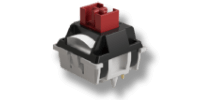
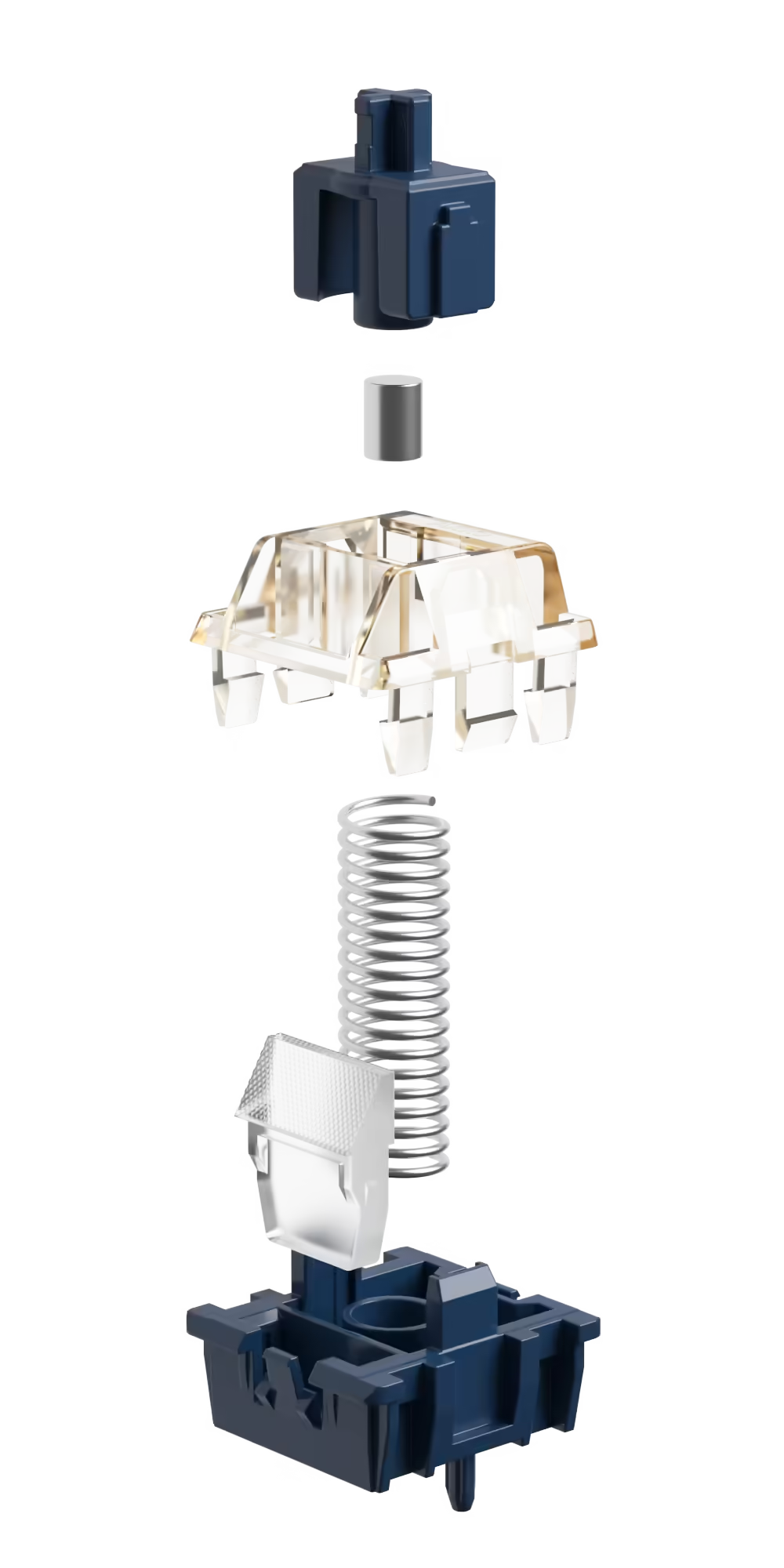
Hall Effect and TMR sensors read the magnet inside a magnetic switch, so no conventional metal contact has to close for the keystroke to register. The stem, spring, housing, plate, and bottom-out impact are still there. Depending on those parts, a magnetic switch can sound controlled and low-pitched or sharp and high-pitched.
A loose-switch sound test therefore tells only part of the story. Once the switch is installed, the plate, case, keycaps, stabilizers, and internal dampening all change what the listener hears.
Why Some Magnetic-Switch Keyboards Sound Sharp
Many early performance-focused magnetic-switch keyboards paired firm aluminum plates with relatively open switch-bottom structures. This setup can hold the switches consistently and give the keys a direct feel, but it may also send more high-frequency vibration into the case. An exposed stem cavity or a hard bottom contact can sharpen the bottom-out sound further.
The result is sometimes described as “clacky” or high-pitched. It is not an unavoidable property of magnetic sensing. It is an acoustic result of the switch and keyboard structure around the sensor. The sound of magnetic switches, in 2024, could be as loud as clicky switches to some point.
Newer magnetic switches increasingly use more controlled bottom housings, revised stem geometry, lubrication, and material combinations intended to move their sound closer to a well-tuned mechanical linear switch. Keyboard makers are also beginning to use non-aluminum plate materials such as FR4 and PC while maintaining the positioning and stability required for magnetic sensing. That broadens the acoustic options available to future magnetic-switch keyboards.
Magnetic Switches vs Silent Mechanical Switches
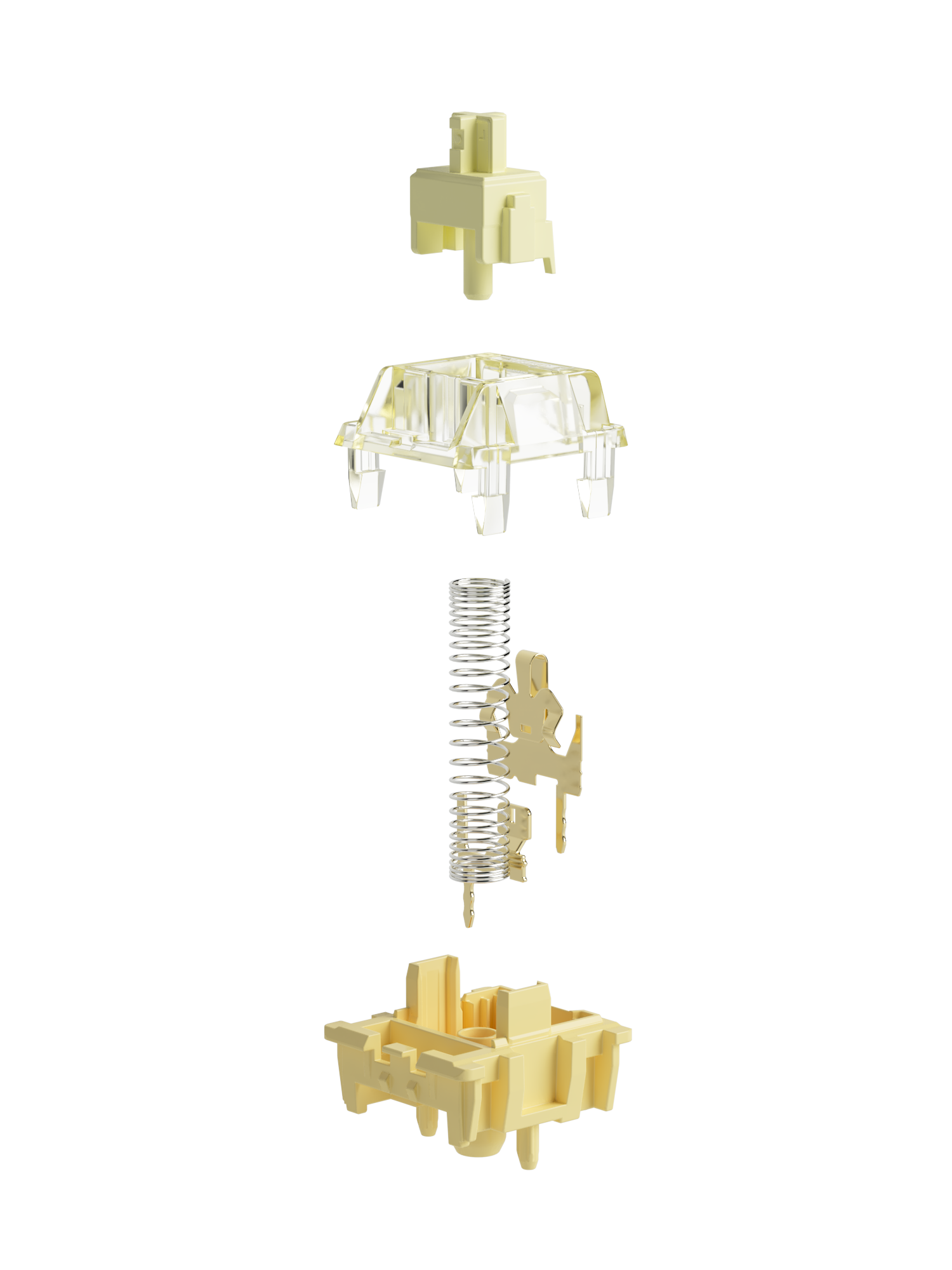
Silent mechanical switches use integrated dampening around the stem’s downstroke, upstroke, or both. A good design can be substantially quieter than an undamped mechanical or magnetic switch, which makes it the most direct option when low noise is the priority.
The tradeoff is feel. The dampening material changes how the stem stops at the top and bottom of travel. Some users like the cushioned landing; others describe certain designs as soft or slightly mushy. This is a feel preference but the silicone cushion could potentially lead to slow bottom-out.
Quieter magnetic designs control housing resonance, stem movement, and bottom-out character without relying as heavily on impact dampening. This can preserve a firmer linear feel while still providing adjustable actuation and Rapid Trigger when the keyboard firmware supports them.
The tradeoffs are fairly clear:
- Choose a silent mechanical switch when the lowest possible typing noise matters more than a crisp bottom-out or magnetic gaming features.
- Consider a quieter magnetic-switch keyboard when you want adjustable actuation, Rapid Trigger, and smooth linear travel with a more conventional key feel.
- Avoid assuming that either category is quiet without listening to the complete keyboard.
Why Linear Travel Works Well for Quiet Gaming
Most magnetic switches are linear. Their force usually increases through the travel without a deliberate tactile bump or click mechanism. This does not make them silent, though it removes one physical feedback event that can add sound or encourage a harder press.
Linear travel also pairs naturally with adjustable magnetic sensing. Firmware can set the actuation point and reset the key according to its movement instead of relying on a fixed metal-contact point. Players might use a shallow setting for movement keys and a deeper one for commands they do not want to trigger accidentally.
These settings change input behavior, not acoustics. A 0.1 mm actuation point does not make the switch quieter, and Rapid Trigger does not reduce bottom-out noise. Players who press every key to the plate will still hear the physical structure of the keyboard.
Redefine a Quiet Gaming Keyboard
A useful quiet gaming keyboard reduces distracting peaks while preserving the control and feedback its user expects. Some players will prefer the cushioned landing of a deeply damped silent mechanical switch. Others will prefer a lower-pitched magnetic switch with adjustable actuation and a firmer bottom-out.
Judge the complete keyboard. Switch housing, plate material, case construction, stabilizers, keycaps, firmware, and typing force all affect the result. Magnetic sensing adds useful gaming functions, but the sound still depends on the physical design around it.
Magnetic switches are not inherently quieter than mechanical switches, and dedicated impact dampening still gives silent mechanical switches an advantage when minimum noise is the goal. Modern magnetic-switch keyboards, however, are moving away from the sharp sound of some early designs. Revised housings, more plate choices, and better internal tuning make them easier to use in shared rooms.
A well-tuned magnetic-switch model suits players who want a quieter keyboard without a heavily cushioned key feel. The deciding factors are the gaming functions you need and whether the sound remains comfortable over a long session.