




SOCD vs DKS: What They Do, Where They Help, and Why They May Feel Wrong
SOCD and DKS are often presented as must-have competitive gaming features. A highlight clip appears, a keyboard setting is mentioned, and the feature gets credit for the result.
That is too simple. SOCD and DKS solve different input problems, and neither replaces movement timing, crosshair placement, or practice. They can make some actions easier to express, but they can also conflict with habits built over hundreds of hours.
What Is SOCD?
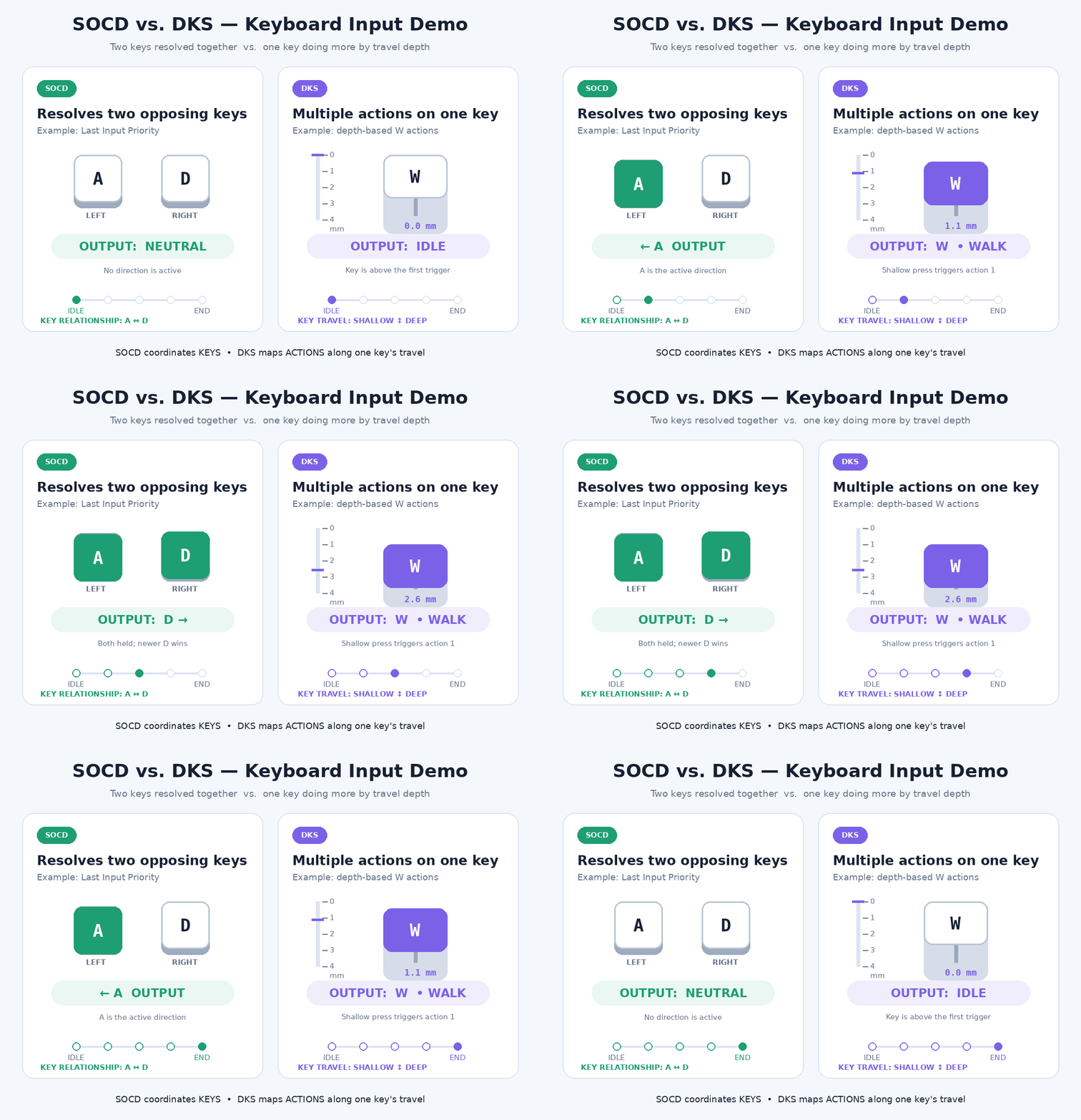
SOCD stands for Simultaneous Opposing Cardinal Directions. On a keyboard, a common example is pressing A and D at the same time. Because the commands point in opposite directions, the firmware needs a rule for the overlap.
Possible SOCD resolution modes include:
- Neutral: Neither direction is sent while both keys are held.
- Last input priority: The most recently pressed direction wins.
- First input priority: The first held direction keeps priority.
- Fixed priority: One assigned direction always wins during an overlap.
Names and available modes vary by manufacturer. Akko calls its last-input-priority implementation Snap Keys on supported keyboards.
With last-input priority, a player can hold A and press D; the output changes to D without waiting for A to be physically released. The feature removes an overlapping-input conflict. It does not aim, fire, or decide when the correct movement should happen.
What Is DKS?
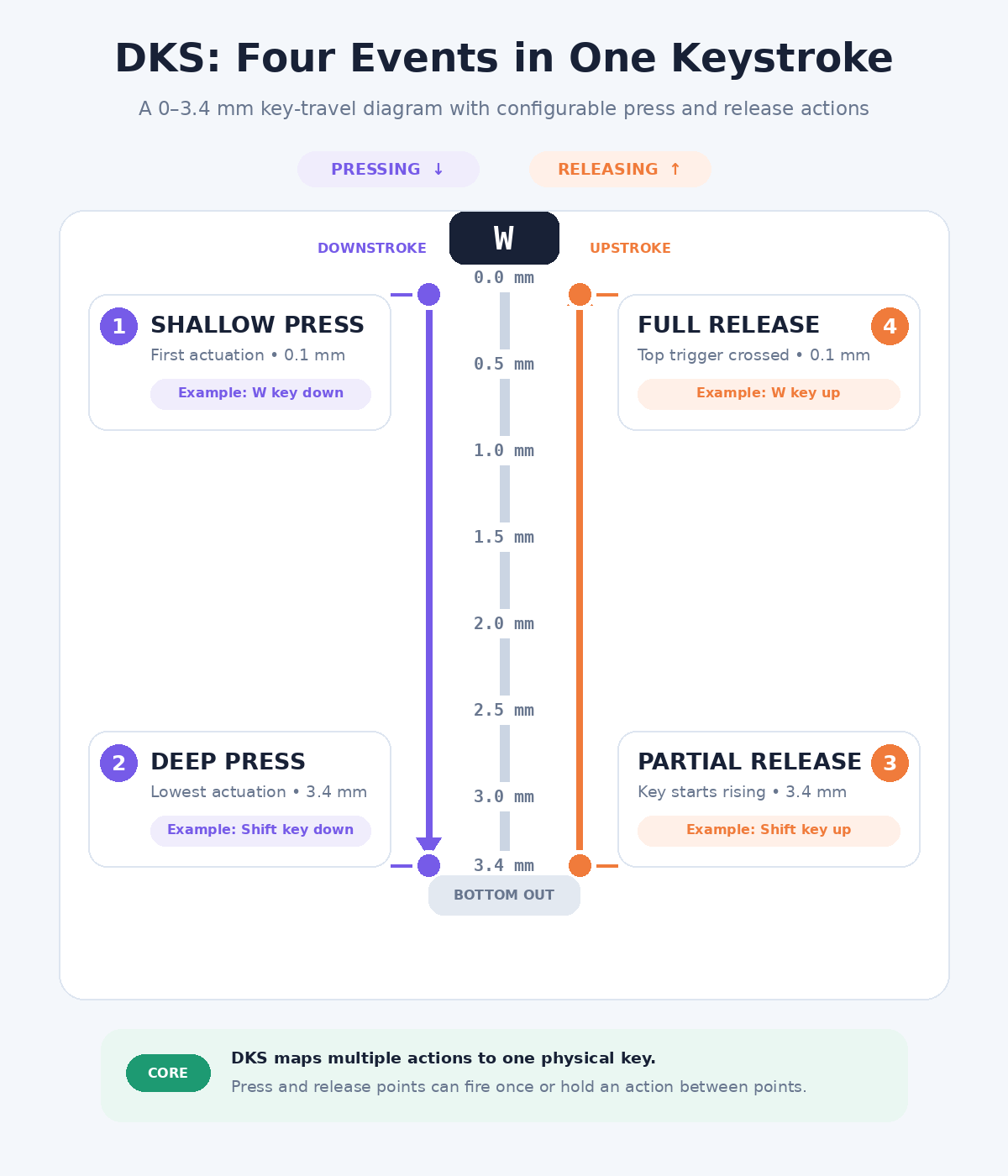
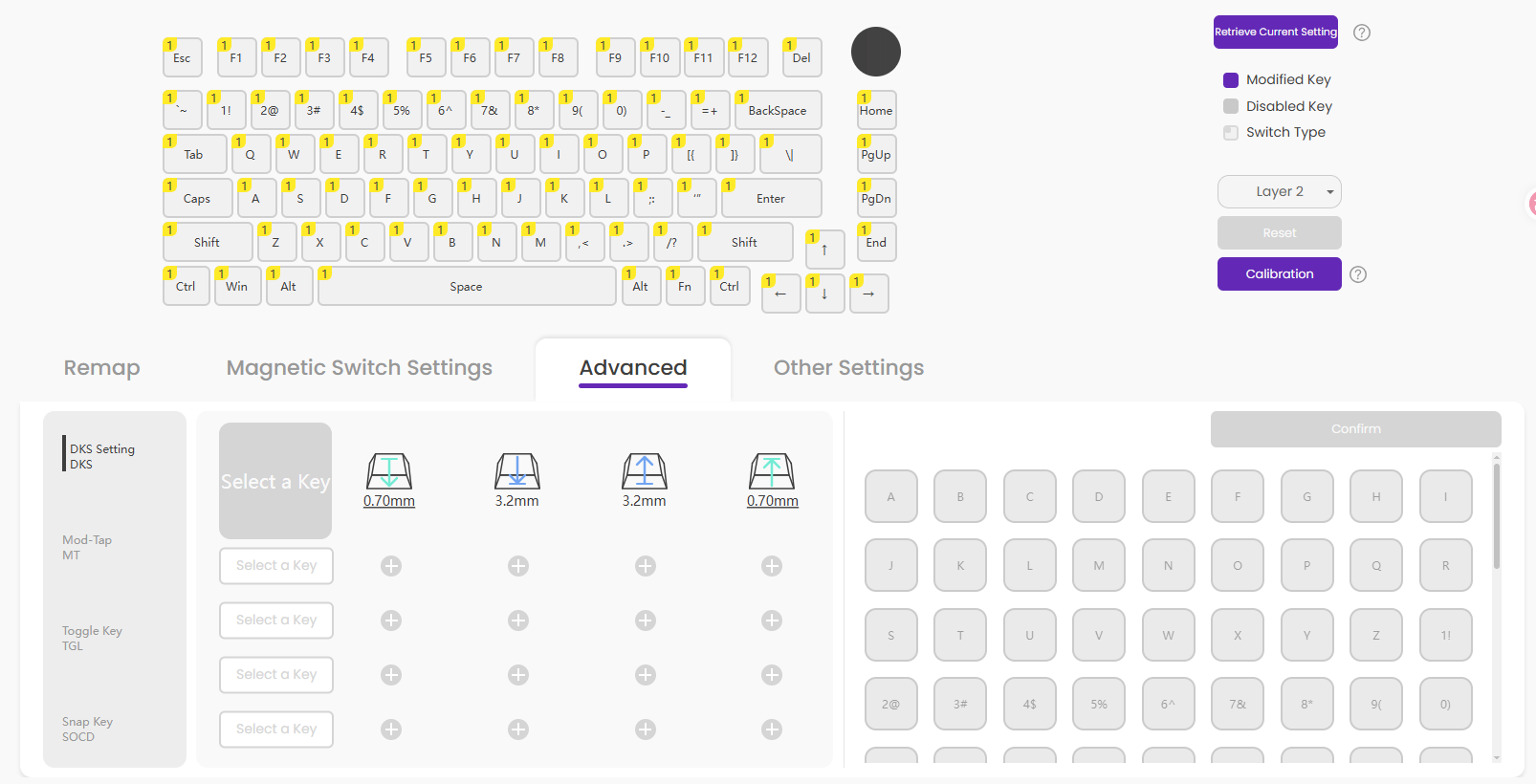
DKS stands for Dynamic Keystroke. It uses key travel as a programmable input timeline. Different actions can be assigned to press and release points.
For example, a key could send one command after a shallow press, another after a deeper press, and separate release events as the key rises. In Akko’s implementation, up to four actions can be assigned across these press and release stages.
This is more than ordinary actuation adjustment. Actuation adjustment changes when one key activates. DKS can map multiple events to one physical key movement.
SOCD and DKS Solve Different Problems
SOCD answers one question: What should happen when opposing commands overlap?
DKS answers another: What commands should occur at different stages of one keypress?
SOCD is usually relevant to paired movement keys. DKS can be applied to movement, abilities, walk modifiers, or other controls, depending on the keyboard and game.
They can produce superficially similar outcomes. A DKS configuration could, for example, send an opposite-direction command on release. But that does not make all release-triggered movement features equivalent to DKS. Vendor names, event timing, cancellation behavior, and firmware logic differ.
Why SOCD Can Feel Faster
Without a priority rule, overlapping A and D may produce neutral input in many games or keyboard configurations. During a rapid direction change, the player may briefly hold both keys. Last-input-priority SOCD can immediately select the newer direction instead of waiting for the older key to rise above its release point.
The benefit is therefore about input resolution and consistency. It can reduce the delay caused by imperfect finger overlap. Skilled players may use that consistency during rapid peeks or repeated strafes.
The feature still does not guarantee a successful counter-strafe. The game decides how velocity changes, and the player still controls shot timing.
Why SOCD May Feel Bad for Some Players
Movement technique is habitual. A player who relies on a deliberate release before pressing the opposite key may find last-input priority natural. Another player may use a different rhythm and feel that the keyboard keeps changing direction when they expected a neutral pause.
Common adjustment problems include:
- firing before the character reaches the desired accuracy state;
- unexpected movement because the previous key is still physically held;
- difficulty walking or making small positional corrections;
- loss of a familiar neutral interval between directions.
SOCD can expose timing errors as easily as it can remove overlap delay. That is why enabling it does not create the same improvement for every player.
Why DKS Can Feel Powerful
DKS can compress a sequence of inputs into the travel of one key. A shallow press and a deep press can represent different intentions, and a release event can trigger another action without moving a second finger.
This may be useful when the desired sequence is predictable and repeatable. It can also reduce finger travel for a carefully designed control scheme.
Why DKS Can Disrupt Muscle Memory
The same automation can become a limitation when the situation changes. In an FPS game, movement is not one isolated technique. Peeking, stopping, walking, repositioning, and using abilities all share the same keys.
A release-triggered command may be useful during one counter-strafe but unwanted during a quiet correction or a change of plan. The keyboard follows the programmed travel points; it cannot know the player’s tactical intention.
DKS also demands consistent finger depth. If two actions are separated by a small travel window, an imprecise press may trigger the wrong stage. Adjustable magnetic-switch sensing makes these mappings possible, but it does not remove the need to learn them.
Game Rules Come Before Keyboard Features
Input automation policies vary by game, server, and tournament. Valve announced in August 2024 that players suspected of automating multiple actions from a single input may be kicked from Valve Official Servers in Counter-Strike 2, and it specifically advised disabling features such as Snap Tap before joining.
That policy matters more than whether a keyboard driver permits the setting. Before using SOCD, DKS, release-triggered actions, macros, or similar features in competitive play, check the current rules for the game and event.
Which Feature Fits Which Player?
SOCD may suit players who want deterministic handling of opposite-direction overlap and are willing to rebuild movement timing around that rule.
DKS may suit players who have a specific, legal multi-stage input in mind and can maintain consistent press depth. It is less attractive when the same key needs many context-dependent behaviors.
Neither feature needs to be enabled simply because it exists. A useful test is to record repeatable drills with the feature off and on. Compare movement errors and consistency, not one impressive clip.
SOCD is an opposing-input priority system. DKS is a multi-stage key-mapping system. One resolves a conflict between keys; the other turns key travel into several programmable events.
Both can change execution, but neither provides game knowledge or perfect timing. Treat them as control options, verify that the game allows them, and keep only the settings that make your own inputs more consistent.