


Why Rapid Trigger Keyboards May Not Be for Everyone
Rapid Trigger (RT) is hyped as the biggest keyboard upgrade in years. Magnetic Hall Effect switches promise lightning-fast inputs and customizable actuation that mechanical keyboards can’t match. Yet many buyers—especially office workers, writers, and hybrid users—turn the feature off within days, frustrated by typos, double inputs, and an overall “unstable” feel.
Yes. Rapid Trigger isn’t universally better. It’s a specialized tool optimized for one specific motion: fast, repeated directional taps common in competitive FPS games. For everyday typing, emails, coding, or spreadsheets, it often creates more problems than it solves. In this guide, we’ll break down the real mechanics with practical numbers, explain where it shines, why it struggles in office workflows, and how to tune (or disable) it for reliable productivity use.
What Rapid Trigger Actually Does
Traditional mechanical switches have a fixed press point and a fixed reset point, with a real gap between them. You press down to register, and the key has to travel back up a noticeable distance before it’ll register again—that gap is what stops the switch from chattering.
Magnetic Hall Effect switches change this. Sensors continuously track the exact position of the key stem via magnetic fields. Rapid Trigger removes the fixed reset buffer: as soon as the key moves upward by a small customizable distance (the RT sensitivity), it resets and is ready to actuate again.
Simple visualization (press depth vs. time):
- Traditional: Down past actuation → hold → must rise significantly past reset point → next press.
- RT: Down past actuation → slightest upward movement (e.g., 0.1–0.5mm) = instant reset → ready for next input.
Higher sensitivity (lower mm value) requires less upward travel to reset. This removes the safety buffer in exchange for speed.
・Reset:Fixed Position
・Reset:By adjusting the RT sensitivity, even the slightest upward movement will immediately reset.
→ after the reset, pressing down again will instantly retrigger.
The Use Case RT Was Built For
Rapid Trigger excels in competitive FPS games, especially counter-strafing and tap-strafing. Players need to instantly cancel directional movement (A or D) to stop momentum and change direction. Traditional switches’ reset lag hurts here. RT detects the tiniest release and re-arms the key almost immediately.
Most guides recommend 0.2–0.5mm sensitivity for movement keys, paired with very low actuation (0.1–0.4mm), depending on finger control. It’s a game-changer for rhythm games and any scenario with rapid same-key repeats. For these players, the learning curve and trade-offs are worth it.
The Office Problem: Why Sensitivity ≠ Productivity
Natural typing isn’t clean, full up-and-down strokes. Fingers rest on the home row, apply varying pressure, and produce micro-bounces or partial releases. RT is engineered to detect those tiny upward movements, which cause issues:
- Double inputs and chatter: Letters repeat unintentionally during normal typing speed because the key resets too aggressively on light lifts. This is a common complaint in real-world testing.
- Sensitivity tuning trap: Aggressive settings are great for WASD, but become problematic on alphanumeric keys. Typing and utility keys need conservative settings.
- No real benefit for office tasks: Excel, email, or document writing doesn’t involve dozens of same-key alternations per second. The “instant reset” advantage rarely applies.
How to Actually Tune It (or Turn It Off) for Typing/Office Use
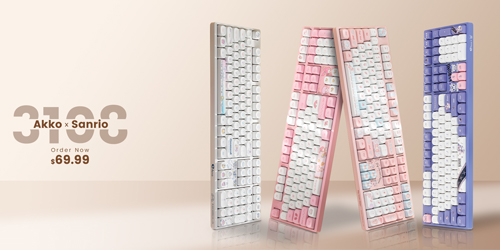
Modern Hall Effect keyboards (like those from Akko, MONSGEEK, Wooting, and others) support per-key customization and profiles. Use this to your advantage.
- Per-key or profile approach: Enable full Rapid Trigger only on WASD and key gaming inputs. Keep alphanumeric, punctuation, and modifier keys on fixed actuation with a proper reset buffer. Some keyboards offer “Sensitive Mode” (low fixed actuation, e.g., 0.5mm) versus full “Game Mode” RT.
- Raise actuation for typing keys: Start with deeper fixed actuation around 1.0–1.5mm (or higher) for reliability. This better matches the traditional mechanical feel and reduces accidental presses.
- Diagnostic test: Type a fast paragraph in a text editor. Repeated or doubled letters? Increase the RT release distance (make it less sensitive) or switch the key to fixed mode. Adjust in small 0.1–0.2mm increments and test one key at a time.
- Disable RT entirely: For users who are 90%+ productivity-focused with occasional gaming, keep RT off by default. Switch to a dedicated gaming profile when needed. This avoids constant adaptation.
Quick Decision Framework
| User Type | Recommended Settings | Rationale |
| Competitive FPS Player | RT on (0.2–0.5mm), low actuation on movement keys | Maximizes speed for counter-strafing and taps |
| Hybrid Gamer/Typist | RT on movement keys only; 0.8–1.5mm fixed on typing keys | Balances performance and reliability |
| Pure Office/Productivity | RT off or minimal; deeper fixed actuation (1.0–2.0mm) | Prioritizes accuracy and comfort over edge-case speed |
Rapid Trigger is an incredible innovation for its intended niche, but it’s not a one-size-fits-all upgrade. Understand the mechanics, tune per-key where possible, and DON’T be afraid to turn it off for daily driving. The best keyboard is the one that matches your actual workflow—not the marketing hype. Test thoroughly, start conservative on typing keys, and you’ll get the responsiveness you need without the typos.