




Lubricating Clicky Keyboard Switches Without Ruining the Click
Lubing a linear switch is usually straightforward: reduce friction, control spring noise, and avoid applying too much lubricant. Clicky switches are less forgiving. Their sound and tactility depend on small moving parts, and lubricant in the wrong place can soften the bump, mute the click, or make different switches feel inconsistent.
That does not mean clicky switches can never be lubricated. It means the goal and the lubrication points must be chosen carefully. If the objective is to reduce spring ping while preserving the original click mechanism, spring-only lubrication is the lowest-risk approach.
Why Clicky Switches Are Easy to Over Lube
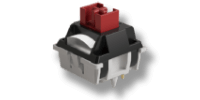
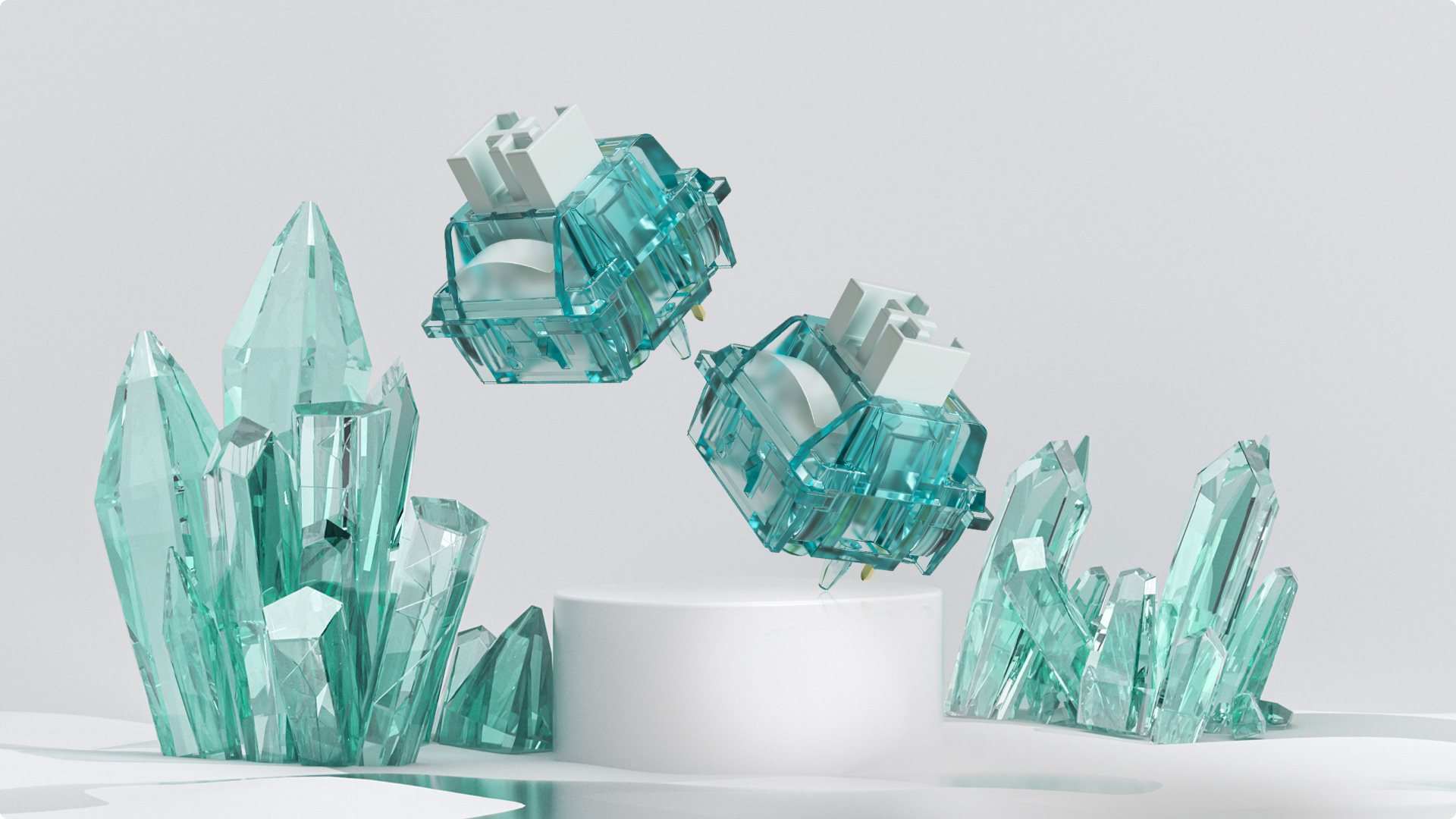
A clicky switch produces more than one type of feedback. The spring returns the key, the housing guides the stem, and a separate mechanism creates the tactile event and audible click. In a CHERRY MX Blue-style design, the switching slide has two moving sections. One section snaps after the tactile point and produces the click.
Lubricant changes friction and damping. That is useful on a spring or sliding rail, but damping the click-producing interface can reduce the sharp motion that creates the sound. A thick layer may also slow a small moving component or make the click inconsistent from key to key.
Click-bar switches use another architecture. A metal click bar is deflected and released by the stem. The risk is similar: lubricating the click bar or the stem feature that drives it can change the sound and tactile force. “Clicky” describes the result, not one universal mechanism, so a lubrication guide must account for the exact switch design.
What a Ruined Clicky Switch Feels Like
Keyboard enthusiasts sometimes describe an over-lubed or worn clicky switch as having “lost its click.” Typical symptoms include:
- a much quieter or duller click;
- a weaker tactile event;
- a click that appears only on some presses;
- a sticky or slow-moving click component;
- different sound and feel across switches in the same keyboard.
Not every weak click is caused by lubricant. Wear, contamination, damaged parts, assembly errors, and manufacturing variation can produce similar symptoms. Cleaning may help when excess lubricant or debris is responsible, but it cannot reverse mechanical damage.
The Safest Target Is Usually the Spring
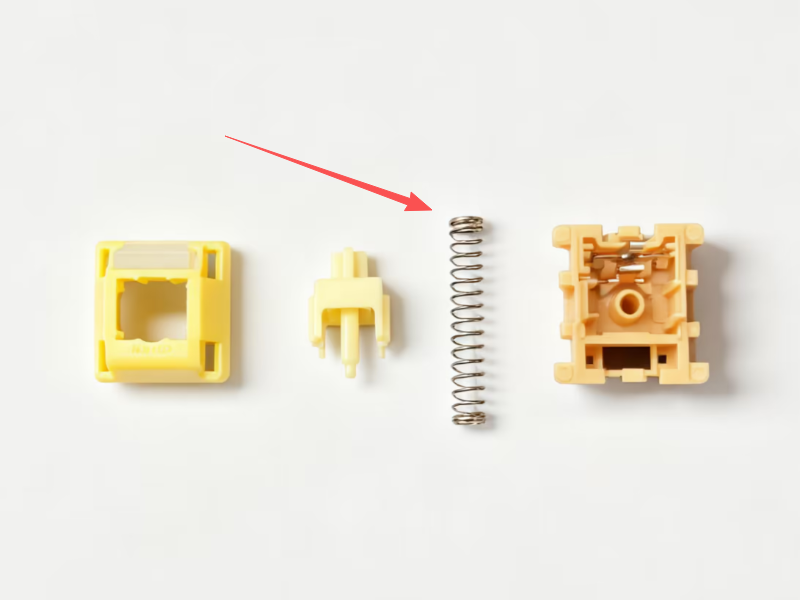
Spring ping is a metallic ringing that continues briefly after the key moves. Spring crunch is a rough or scraping sound during compression. Both can be reduced by controlling spring vibration and friction without touching the click mechanism.
A very thin, compatible lubricant can be applied to the spring. The coating should be barely visible. The purpose is not to fill the switch with grease; it is to leave a controlled film on the spring surfaces that contact the housing or spring guide.
Spring lubrication may make the switch sound cleaner and feel less scratchy. It does not materially change the spring’s designed force curve, operating force, actuation point, or keyboard latency. A smoother press can feel lighter to the user, but the calibrated spring force has not suddenly dropped.
Brush Lubing Versus Bag Lubing
Two common spring-lubing methods are worth separating.
Brush Lubing
Brush lubing gives the most control. Remove the spring, use a small brush, and apply a thin film around the spring. This takes longer but makes it easier to avoid excess lubricant.
Bag Lubing
Bag lubing places multiple springs in a clean bag with a small quantity of light oil and distributes it by shaking. It is fast and can produce an even coating, but excessive oil is harder to remove and may migrate after assembly.
For clicky switches, control matters more than speed. Brush lubing is the safer choice when the user has little experience or wants to preserve a very crisp click.
Areas to Avoid When Preserving the Click
If the goal is to keep the original sound and tactile character, avoid applying lubricant to:
- the click jacket or sliding click component;
- the click bar and the stem feature that deflects it;
- the tactile legs or ramps that create the bump;
- the electrical contact surfaces;
- any opening where lubricant can migrate into the contact system.
Some experienced builders lightly lubricate selected housing rails on certain clicky switches. This can reduce scratching while preserving most of the click, but the result depends heavily on switch architecture, lubricant viscosity, and application thickness. Test one switch before modifying an entire set.
Clicky switches can be lubricated, but “lube the switch” is too broad an instruction. The safest modification is usually to lubricate only the spring with a very thin, compatible oil while leaving the click and contact mechanisms untouched.
The test is simple: the modified switch should lose unwanted spring noise without losing the clear click and tactile event that made it clicky in the first place.