








Exploded vs Non-Exploded 75% Keyboard: Which Layout Is Better for You?
If you’re shopping for a mechanical keyboard, the 75% layout is one of the most popular choices right now—and for good reason. It strikes an excellent balance between compactness and usability. But within the 75% world, there’s a growing divide: exploded versus non-exploded (sometimes called compact) layouts.
Which one should you pick? Let’s break it down step by step.
1. What is a 75% Keyboard Layout?
A 75% keyboard is a compact mechanical keyboard that retains most of the essential keys from a full-size board while trimming the fat.
- Typical key count: Around 80–84 keys.
- What’s removed: The full numpad (number pad) and some of the wider spacing found on TKL (tenkeyless) or full-size keyboards.
- What’s retained: The full function row (F1–F12), dedicated arrow keys, and a navigation cluster (Home, End, Page Up, Page Down, Delete, etc.).
This makes it more space-efficient than a TKL but far more practical than a 60% or 65% keyboard, where you often have to layer or mod keys to access arrows and function keys.
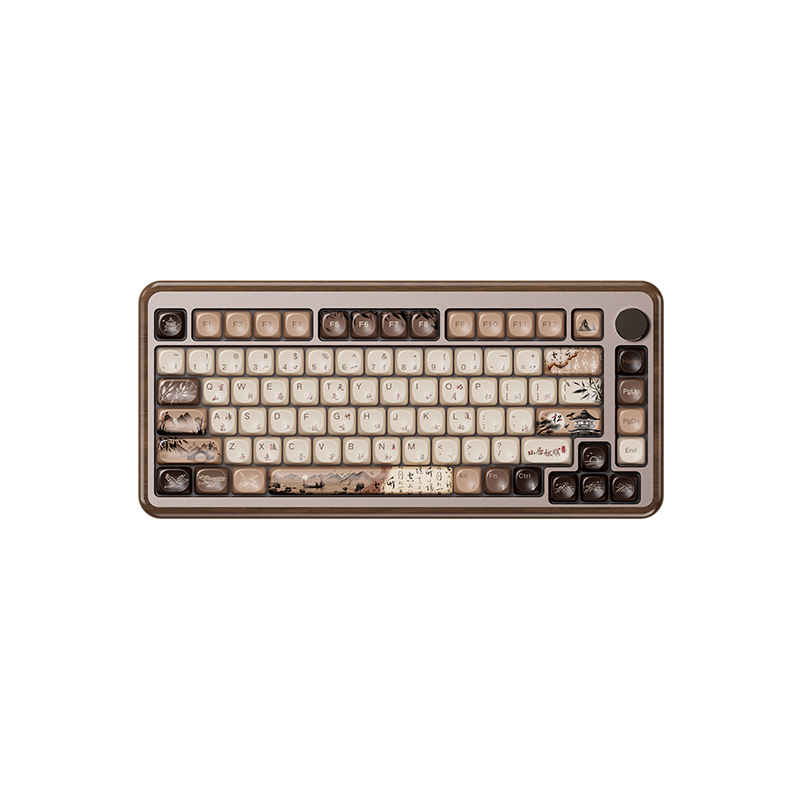
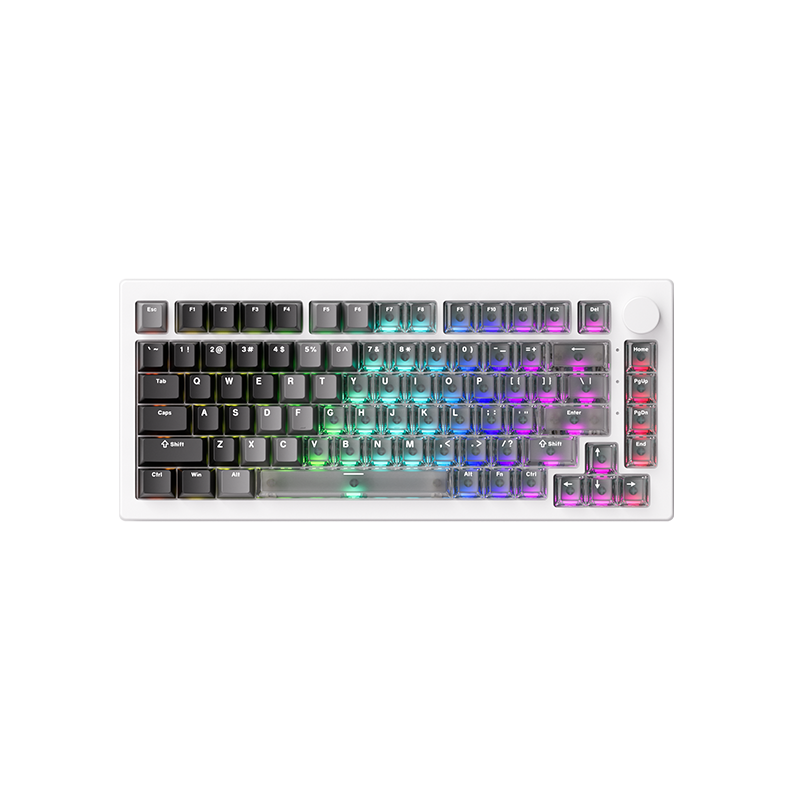
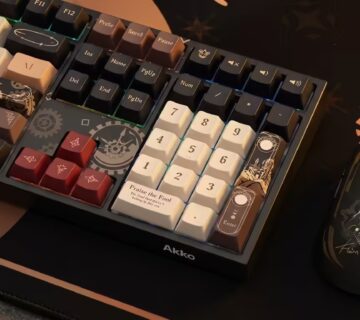
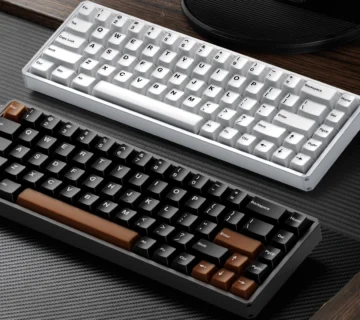
Examples of classic 75% layouts showing the retained function row, arrows, and navigation keys.
2. Advantages of a 75% Keyboard
Why do so many people love 75% boards? Here are the biggest benefits:
Space Efficiency – It saves significant desk space compared to a full-size or even TKL keyboard, without forcing you to give up the keys you use daily.
Better Ergonomics – By shrinking the overall width, your mouse stays closer to your typing position. This can reduce shoulder and arm strain during long gaming or work sessions.
Productivity-Friendly – Unlike 60% or 65% layouts, you keep the dedicated function row and arrow keys. No more awkward Fn-layer combos for basic navigation—great for programmers, writers, and gamers alike.
Clean Aesthetic – It looks “complete” and well-balanced: compact enough to feel modern, but not so minimal that it feels stripped down.
3. What is an Exploded 75% Keyboard?
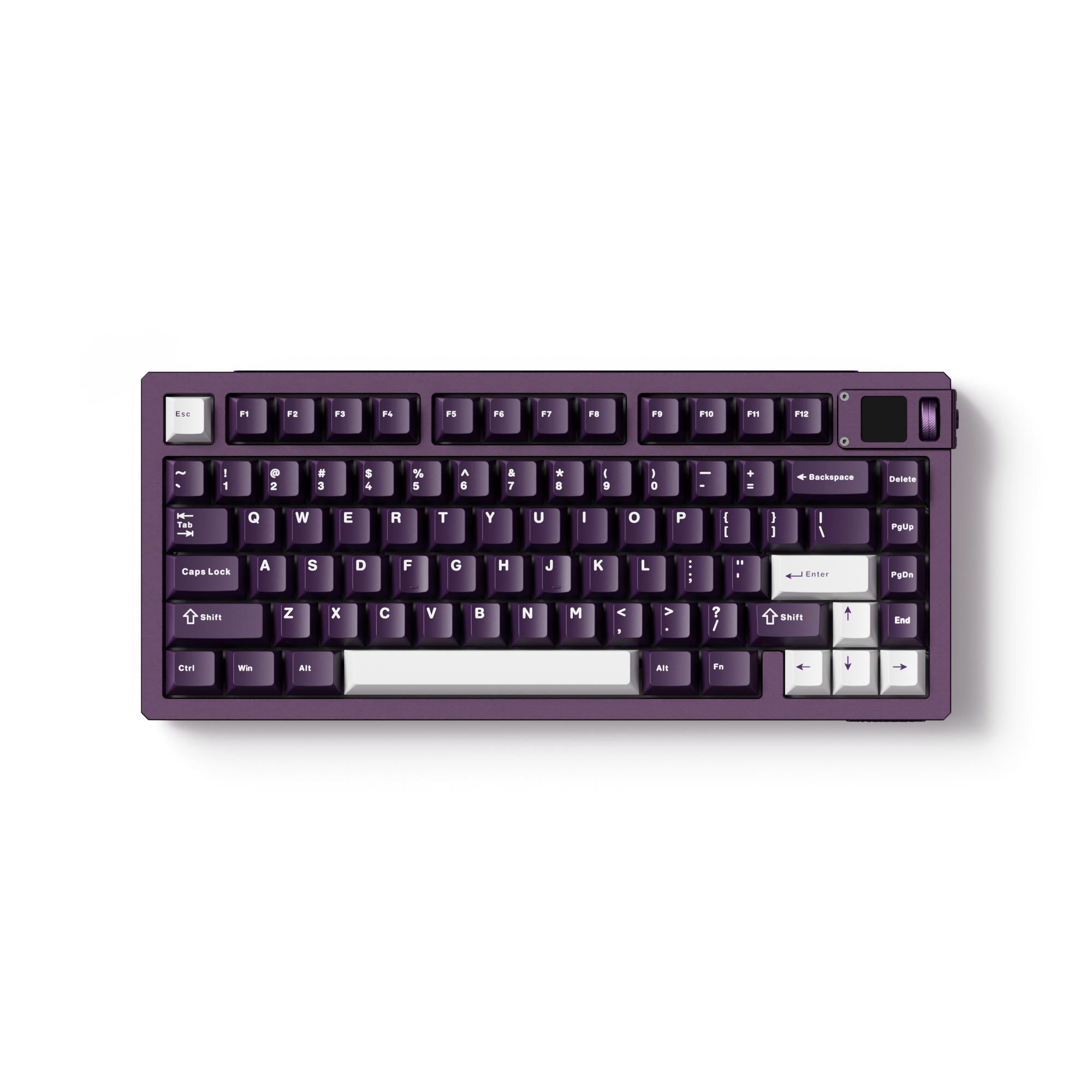
An exploded 75% features intentional gaps (usually 0.25u to 0.5u spacing) between key clusters—the function row, main alphanumeric block, arrow keys, and navigation cluster.
These visible separations create clear visual boundaries, making it easier to locate keys by feel and sight. Exploded layouts have long been common in enthusiast and premium builds because they emphasize structure and clarity.
Popular examples include:
- Akko 5075 B / 5075S series— A fan-favorite gasket-mount board with a distinctive exploded layout and often a volume knob.
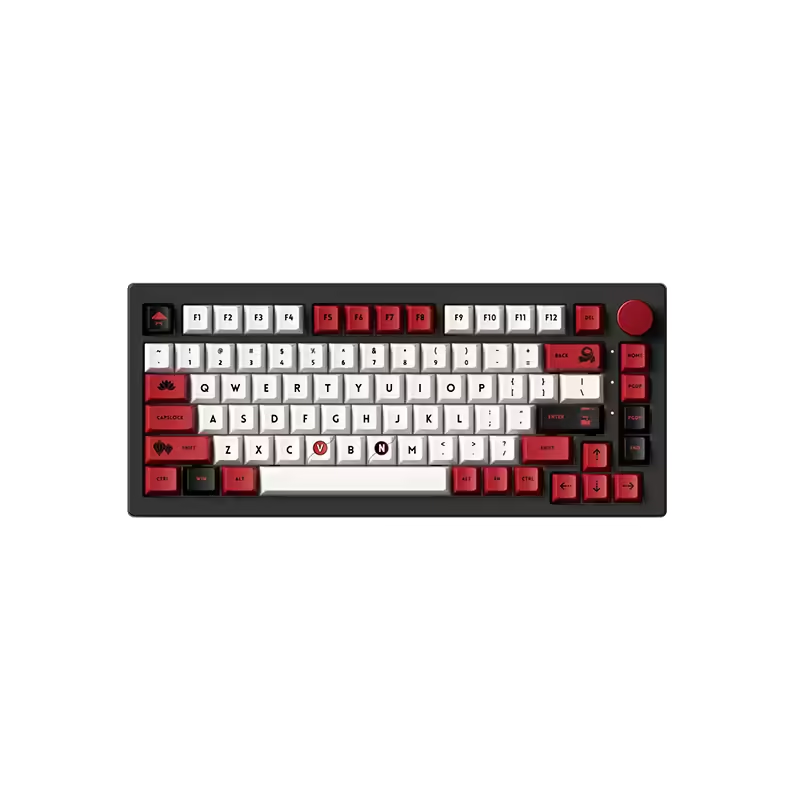
- MonsGeek M1 V5 TMR— A trimode aluminum board known for its clean exploded design, rapid disassembly, and solid typing feel.
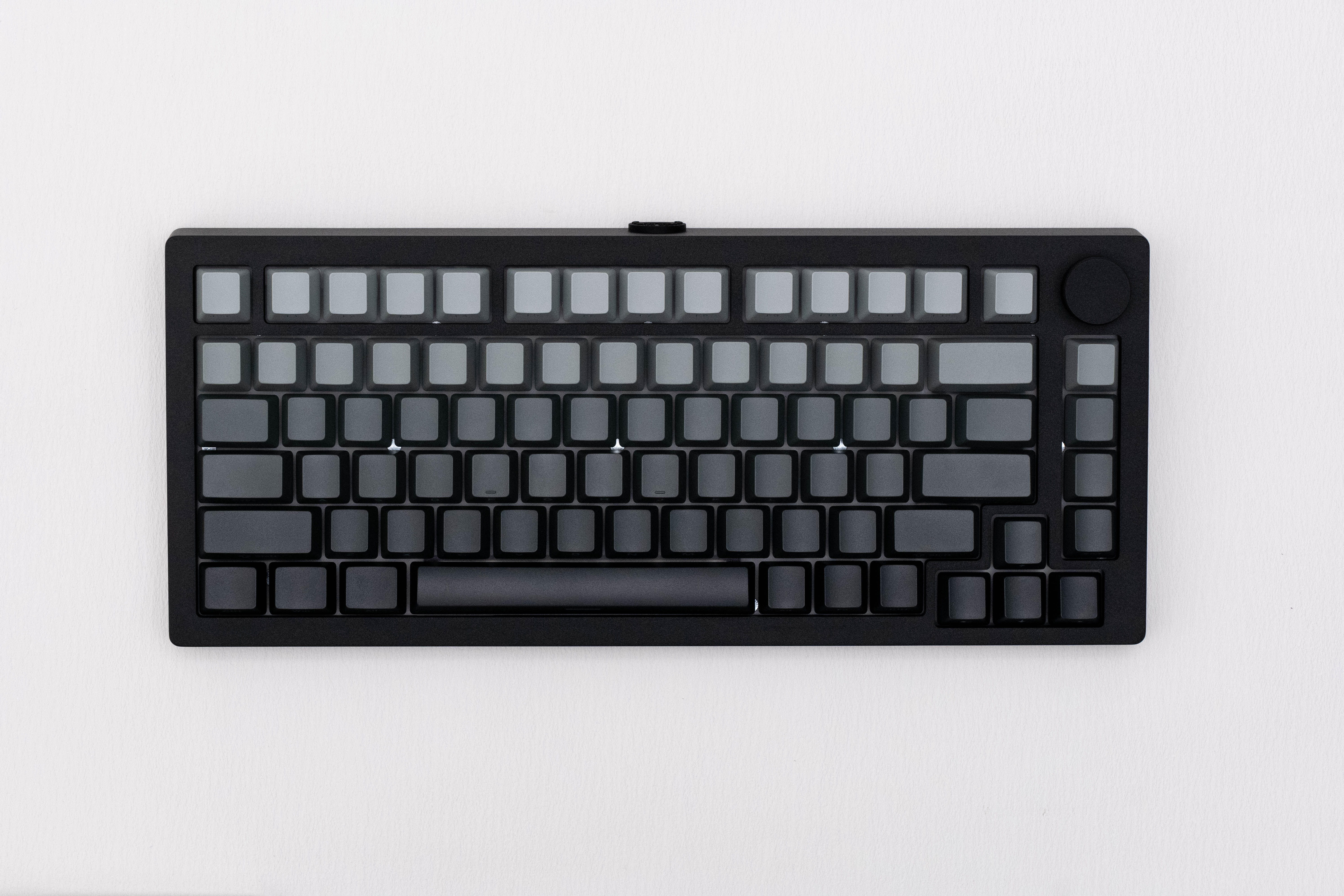
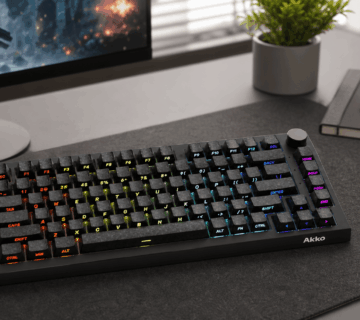
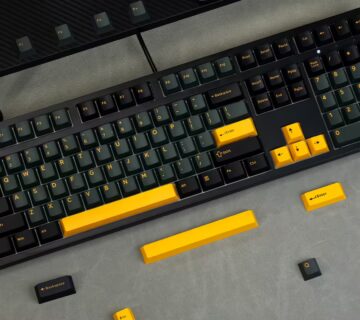
Akko 5075 and MonsGeek M1 V5 are examples of exploded 75% layouts with clear spacing between clusters.
4. What is a Non-Exploded 75% Keyboard?
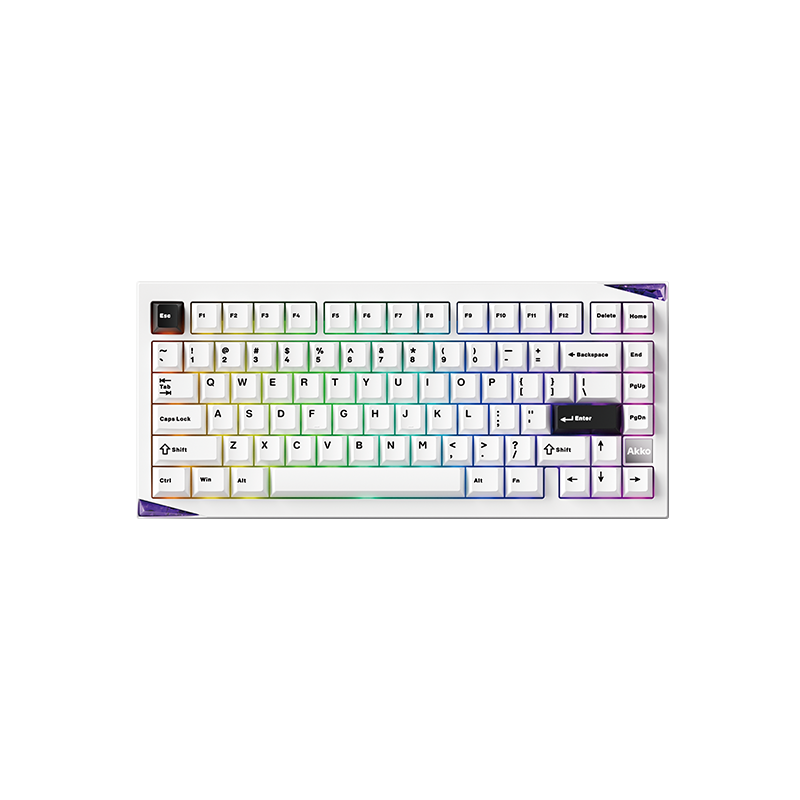
A non-exploded (or compact/dense) 75% squeezes everything together with minimal or zero gaps between the key groups. The result is a tighter, more unified block of keys that maximizes density.
This style gained serious traction among keyboard enthusiasts around 2024–2025, driven by a preference for ultra-clean, minimalist aesthetics. It looks sleek and “solid,” almost like a single cohesive unit.
Popular example:
- Akko MOD007 V5 HE— A premium magnetic (Hall Effect) gaming keyboard that showcases a more compact 75% approach in many of its variants.
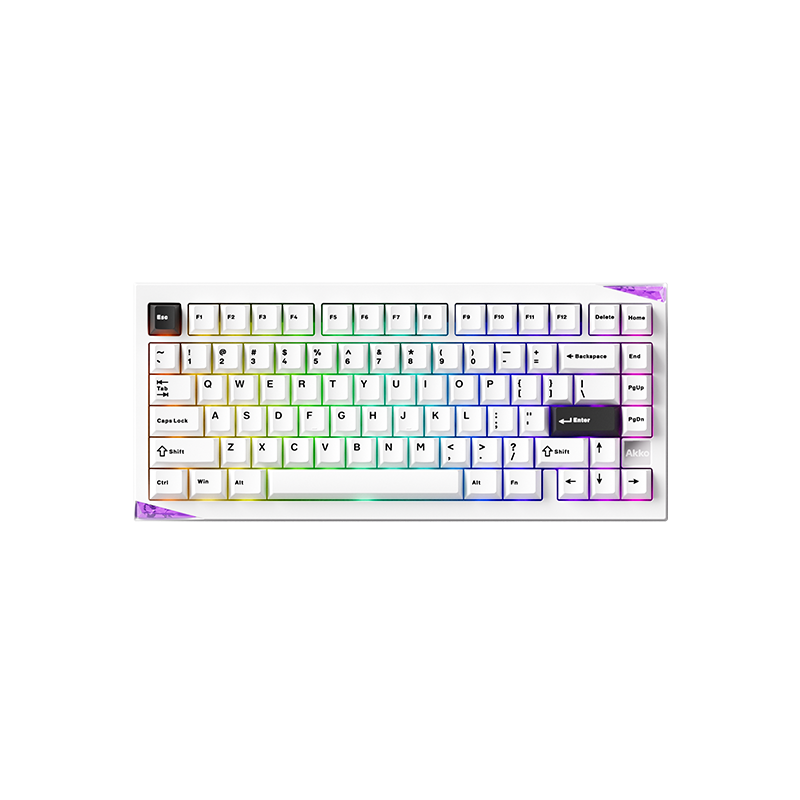
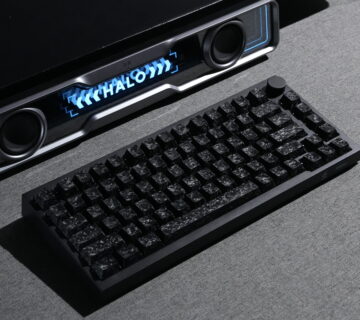
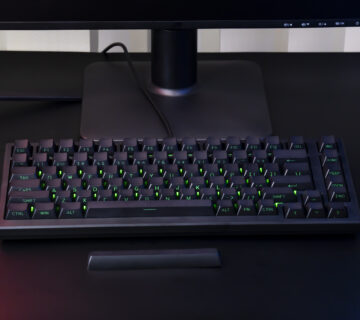
Akko MOD007 V5 HE and similar dense 75% layouts showing the tightly packed design.
For visual comparison:
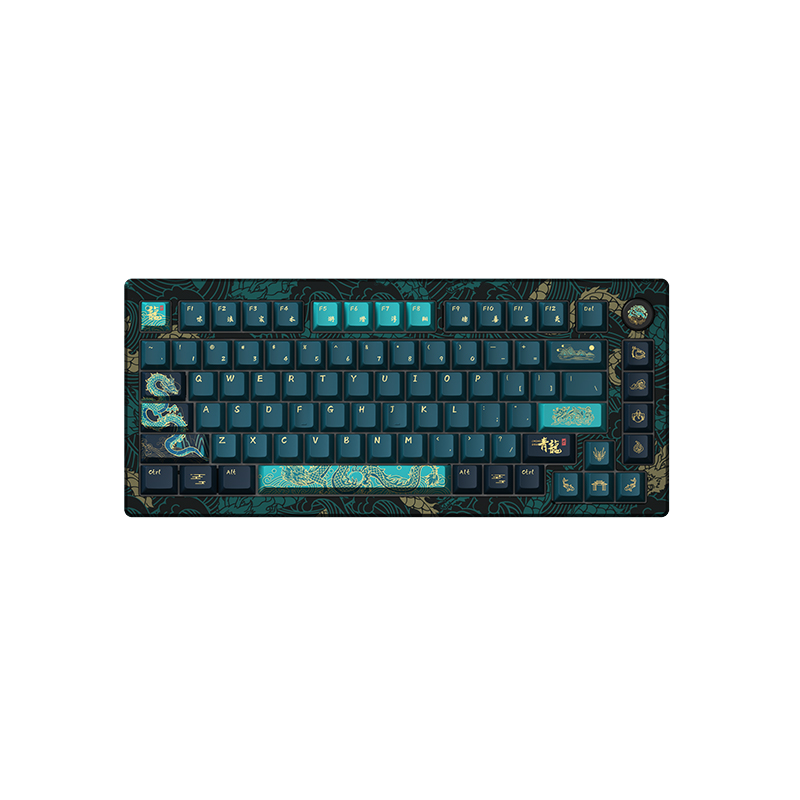
Side-by-side or illustrative views highlighting exploded (with gaps) versus non-exploded (dense) 75% layouts.
5. Exploded vs Non-Exploded 75%: Key Differences
Layout & Structure
- Exploded: Clear visual and physical separation between sections (arrows, navigation, etc.).
- Non-exploded: Everything compressed into one tight block with little to no spacing.
Typing Experience
- Exploded: Generally easier key targeting and fewer accidental presses, thanks to the natural “borders” between clusters. Ideal if you rely heavily on arrow keys or navigation.
- Non-exploded: Can feel faster for reaching keys once you’re accustomed to it, but it may take a short adjustment period to avoid mis-hits in the denser area.
Design Philosophy In practice, the difference is largely aesthetic. From a pure usability standpoint, there’s minimal functional difference for most people. Many enthusiasts own both styles and switch based on mood, setup, or desk space. Your choice often comes down to personal preference: structured clarity versus sleek minimalism.
So which one should YOU choose?
Choose an Exploded 75% if you:
- Frequently use arrow keys, navigation cluster, or function keys.
- Want to minimize accidental presses during intensive typing or editing sessions.
Choose a Non-Exploded 75% if you:
- Want maximum compactness and a smaller overall footprint.
- Travel often or have very limited desk space.
Akko’s Final Tip: Try both styles if possible—many local meetups, keyboard shops, or domestic stores will let you test the feel. The “better” layout is the one that feels right under your fingers and matches your desk vibe.