




Game Better Wirelessly: Nordic nRF54L15 vs. nRF52840
Nordic’s Role in Pro Gaming Mice
Gamers usually focus on the sensor — PAW3395, PAW3950, DPI, or tracking specs — but there’s another part that’s just as important: the MCU. Think of it as the brain of a wireless mouse. While the sensor captures movement, the MCU processes that data and sends it to your PC — reliably, instantly, and without interference. A strong MCU is what keeps polling rates stable and consistent, even in crowded wireless environments.
This is where Nordic Semiconductor comes in. For years, Nordic has been the undisputed gold standard in high-performance wireless MCUs. Nearly all Tier-1 esports mice — from the Logitech G Pro series to the Razer Viper lineup — rely on Nordic chips to achieve that “wired-like” wireless feel.
To be clear: Nordic doesn’t make optical sensors. They make high-performance microcontrollers, and those MCUs are what turn raw sensor data into consistent, low-latency performance on screen.
1. The Showdown: Nordic nRF52840 vs. the New nRF54L15
The Veteran: nRF52840
For many years, the nRF52840 has been Nordic’s flagship MCU for high-end wireless peripherals. It helped enable up to 8K polling rates, stable wireless connections, and respectable battery life — setting the foundation for modern competitive wireless mice.
It’s a proven, reliable solution, and it remains widely used across the industry today.
(Official reference: Nordic nRF52840 product page)
The Challenger: nRF54L15 — The Next Generation
The nRF54L15 represents a major generational leap. Built on a 22nm process node (compared to the 52840’s 55nm), it delivers more performance, better efficiency, and a design that’s clearly aimed at the future of competitive gaming.
Why the nRF54L15 Is Better
1. Processing Power
The nRF54L15 runs a Cortex-M33 processor at 128 MHz, double the clock speed of the nRF52840’s 64 MHz.
This extra headroom is critical when handling unstable or demanding 8K polling rates, reducing the risk of stuttering or data bottlenecks.
2. Power Efficiency
Thanks to its smaller process node, the 54L15 consumes significantly less power.
For mouse designers, this means smaller batteries, lighter weight, or longer playtime — without compromise.
3. Future-Proof Architecture
Improved security features and a modern architecture make the 54L15 better suited for next-generation wireless dongles and upcoming protocol improvements.
4. Smaller Size — A Key Advantage
One of the most important (and often overlooked) benefits: the nRF54L15 can be physically smaller. This makes it far more suitable for today’s trend toward ultra-lightweight mouse designs, where every millimeter and every gram matters.
| Feature | nRF52840 (Current Standard) | nRF54L15 (New Flagship) |
| Core Clock | 64 MHz | 128 MHz (2× Speed) |
| Process Node | 55nm | 22nm (High Efficiency) |
| ADC | 12-bit | 14-bit (Higher Precision) |
2. Real-World Application: Akko Dash Ultra
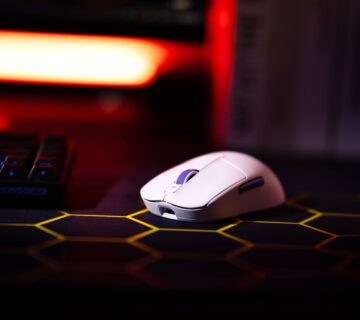
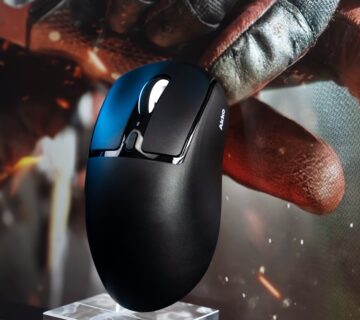
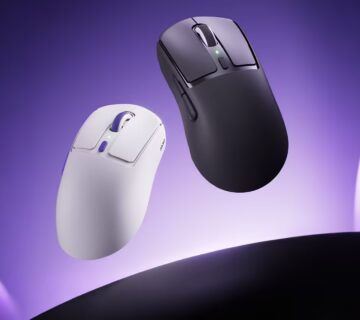
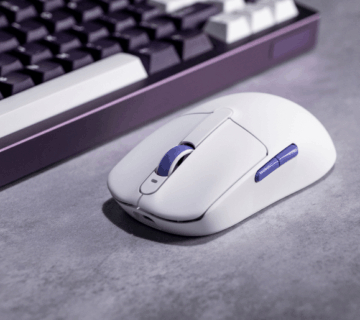
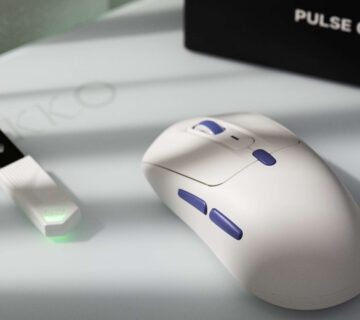
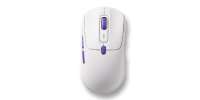
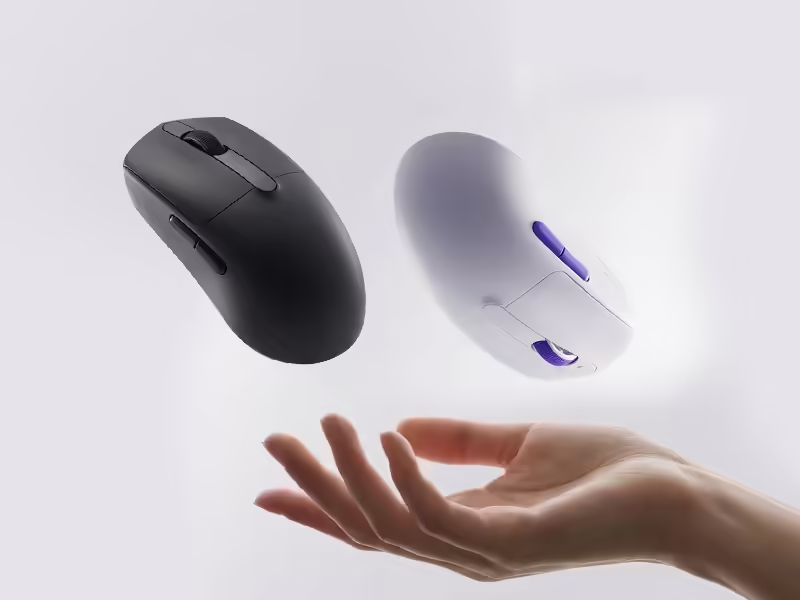
So how does top-tier Nordic technology translate into a mouse you can actually buy? Starting in 2025, more brands have begun adopting next-generation Nordic MCUs like the nRF54L15 in real consumer products — including the Akko Dash Ultra.
The Dash Ultra marks Akko’s entry into the “Extreme Lightweight” category:
- Weight: Approximately 39g±3g, depending on the specific configuration
- Sensor: PixArt PAW3950, paired with Nordic wireless MCU technology
- Performance Benefit: The combination of an efficient Nordic MCU and an ultra-light shell enables fast, fatigue-free aiming — especially in FPS titles like Valorant, CS2, and Delta Force
- Design: A symmetrical shell optimized for claw and fingertip grip, maintaining structural rigidity despite the low weight
- Tri-mode wireless with a consistent 8K polling rate in 2.4G mode
It’s a clear example of how MCU efficiency directly enables lighter designs without sacrificing performance.
Conclusion
Competitive wireless mice are moving in two clear directions: lighter weight and faster (also stable) polling rates — with 8K becoming the new benchmark.
To support this shift, the industry must move beyond legacy solutions. While the nRF52840 laid the groundwork, newer chips like the nRF54L15 (along with related combinations such as the 52820 series) are essential for delivering next-generation performance reliably and efficiently.
Alternatives Worth Mentioning
Nordic remains the leader, but it’s not the only option. Realtek wireless MCUs have also matured significantly in recent years and can be a solid alternative depending on performance targets, cost considerations, and product positioning.
In the end, the sensor may win the headline — but the MCU is what makes wireless gaming truly competitive.